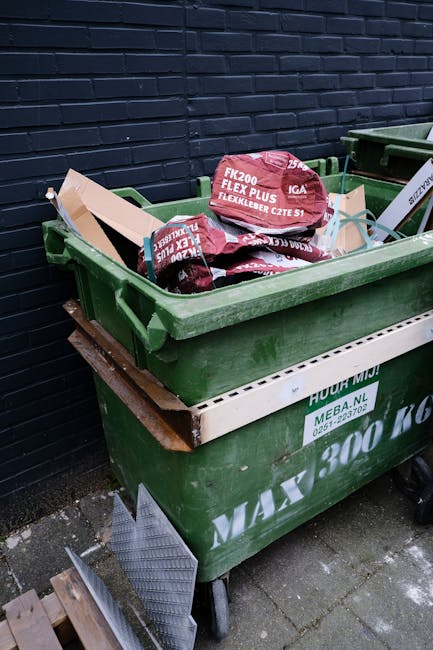
How skip permits affect rubbish clearance Westminster
If you are planning a clear-out in Westminster, the skip permit question can change the whole job. It affects timing, cost, where the skip can sit, and whether your rubbish clearance runs smoothly or stalls at the kerb. In a busy central London borough, that matters more than people expect. One missed permit can mean a cancelled delivery, a rushed rethink, or a skip sitting exactly where it should not be. This guide explains how skip permits affect rubbish clearance Westminster in practical terms, so you can make the right call without faffing about.
We will look at when a permit is needed, how it works, what it means for household and commercial rubbish removal, and the mistakes that cause unnecessary delays. You will also find a simple checklist, a comparison table, and a realistic example from a typical Westminster clear-out. If you are comparing options, it may help to browse waste removal services alongside your clearance plan, or review pricing and quotes before you book. Small details first. Big headaches avoided later.
Table of Contents
- Why skip permits matter in Westminster
- How skip permits work with rubbish clearance
- Key benefits and practical advantages
- Who this is for and when it makes sense
- Step-by-step guidance
- Expert tips for better results
- Common mistakes to avoid
- Tools, resources and recommendations
- Law, compliance, standards, or best practice
- Options and comparison table
- Case study or real-world example
- Practical checklist
- Conclusion
- Frequently Asked Questions
Why skip permits matter in Westminster
Westminster is not the easiest place to leave a skip sitting outside a property. Streets can be narrow, parking is tight, footfall is constant, and many locations have restrictions that are stricter than people realise at first glance. A skip permit is the formal permission to place a skip on public highway land, usually a road, layby, or pavement bay, depending on the local rules and the arrangement available.
So how do skip permits affect rubbish clearance Westminster in practice? They decide whether the skip can be placed close to the waste, how quickly your clearance can start, and whether your chosen disposal method is even possible. A permit can turn a complicated job into a manageable one. Without it, the clearance may have to be moved onto private land, handled through a man and van style collection, or split into several smaller loads. Not ideal when you are already dealing with boxes, broken furniture, builders' rubble, or a flat full of clutter.
There is also the question of trust and compliance. In London, people often assume the skip hire company handles everything automatically. Sometimes they do. Sometimes they do not. Truth be told, that is where many delays begin. The reader-friendly version is simple: if the skip is going on the road, make sure the permit is in place before the delivery arrives.
Expert summary: In Westminster, a skip permit is not just paperwork. It shapes the whole logistics of your rubbish clearance, from where the vehicle can stop to how long the waste sits outside your property.
How skip permits work with rubbish clearance
The basic process is straightforward, but the details matter. If a skip is placed on private property, such as a driveway or forecourt, a permit is usually not needed. If it goes on a public road or other highway space, a permit is generally required. The skip provider or the person organising the clearance usually needs to arrange it in advance. In Westminster, this may involve lead time, because public space is managed carefully and locations are heavily used.
During a rubbish clearance, the permit determines the placement plan. That affects everything else:
- the size of skip that can fit safely
- where the lorry can unload
- whether traffic or pedestrians may be obstructed
- how long the skip may remain in place
- what lighting or safety markings are needed
For many domestic jobs, a skip is only one possible route. Some households find it works best for a larger purge like loft clearance, garage clearance, or a renovation clear-out. Others decide that an alternative removal method is less stressful. For example, if you are dealing with mixed household items rather than loose rubble, services such as house clearance or home clearance can be more practical than waiting on a permit and a roadside skip.
On the commercial side, timing can be even more sensitive. Offices, shops, and sites near busy roads often need the waste gone quickly with minimal disruption. In those cases, people may compare skip hire with business waste removal or a scheduled office clearance, especially if there are bulky items, archive boxes, or old fixtures to move.
A small but important detail: the permit does not remove your duty to manage the waste responsibly. It only authorises where the skip sits. You still need the right contractor, the right waste stream, and safe loading. That part is easy to overlook when you are in the middle of a stressful move or renovation.
Key benefits and practical advantages
When handled properly, a skip permit can make rubbish clearance much smoother. It is not glamorous. It is simply useful. And sometimes that is all you need.
- Closer loading point: If the skip can sit near the waste source, the job is faster and less physically demanding.
- Better project control: A permit helps keep the clearance structured rather than becoming a messy series of last-minute decisions.
- Reduced disruption: Planning the placement properly helps avoid blocking doors, bins, walkways, or access points.
- Safer working setup: The right location means fewer awkward carries and fewer risky manoeuvres.
- Cleaner site management: A well-placed skip keeps rubbish contained instead of spreading across a hallway, pavement, or garden.
There is also a financial angle. A permit has a cost, and that should be budgeted. But so does delay. If a skip cannot be placed where planned, you may pay for rescheduling, extra labour, or a different type of clearance entirely. In some cases, a permit is the difference between a one-visit solution and a much more drawn-out process.
For awkward or item-heavy jobs, choosing the right related service can also make life easier. A furniture clearance or furniture disposal booking may be better than a skip if most of the load is bulky furniture rather than loose mixed waste. Likewise, a builders waste clearance approach can be more efficient on renovation sites where debris needs to be removed quickly.
Who this is for and when it makes sense
Skip permits are relevant for a fairly wide group of people in Westminster. If you are unsure whether you need one, ask yourself a simple question: will the skip be on private land, or does it need to sit on the street?
This is especially useful for:
- homeowners clearing out clutter before a move
- landlords preparing a property between tenancies
- flat residents with limited private access
- builders and decorators generating bulky waste
- office managers clearing surplus equipment
- people emptying a garage, loft, or garden in stages
For flats and properties without a driveway, roadside placement is often the only realistic option, which is why skip permits become such a big factor. If you live in a conversion, mansion block, or a street with controlled parking, you may find that a skip is possible but only if the permit is organised in time. That can be the difference between getting the job done this week or pushing it into next week and losing momentum.
It also makes sense to think beyond the skip itself. For example, if you are dealing with a small number of pieces of unwanted furniture, a clearance method designed around those items may be simpler than arranging roadside storage. A flat clearance or garage clearance can be a better fit when the waste is mixed and access is tight. And if the job spills outdoors, garden clearance may be more appropriate than a skip that sits blocking the road for days.
Sometimes the best solution is not the obvious one. That sounds obvious, I know. But in Westminster, space and access are often the real deciding factors, not just volume.
Step-by-step guidance
If you want to avoid complications, use a simple planning process. It does not have to be complicated.
- Identify where the skip will go. Private land or public road? This is the first question, not the last.
- Estimate the waste type and volume. A mixed clear-out is different from inert building rubble or mostly furniture.
- Check access conditions. Look for low branches, narrow turns, parked cars, controlled zones, and any awkward loading points.
- Decide whether a skip is the best tool. Sometimes a different clearance method is quicker and cleaner.
- Arrange the permit early if the skip will be on the road. Leave room for processing time and delivery coordination.
- Confirm placement rules. Ask about size limits, safety markings, and how long the skip can remain in place.
- Prepare the load. Keep hazardous items out and avoid overfilling.
- Book collection or completion at the right time. Do not let the skip become a sitting target for added rubbish from passers-by.
One very practical tip: if you are near a busy Westminster street, schedule the clearance so that the vehicle drop-off happens when access is easiest. Early morning can work well for some properties, but not always. The real answer depends on parking pressure, resident access, and how much space the lorry needs to manoeuvre. A local operator who understands the area usually spots these issues before they become problems. Worth its weight in gold, honestly.
Expert tips for better results
After many clearances, the same patterns tend to show up again and again. The people who plan a little up front have a far smoother day.
1. Match the method to the waste
Do not default to a skip just because it feels familiar. If your waste is mostly reusable furniture, consider whether furniture clearance or furniture disposal would be easier. If the job is mostly office clutter, a structured clearance is often more efficient than trying to fill a roadside skip with mixed items.
2. Leave room for access
In Westminster, a skip that technically fits may still be a poor fit in reality if it narrows a driveway, crowds a pavement, or blocks a loading bay. Think beyond dimensions. Think about people, bins, doors, and daily life.
3. Ask about the permit timing early
Never leave the permit question until the day before delivery. That is how jobs stall. Even a well-organised contractor cannot move faster than the process allows, and nobody likes a wasted booking slot.
4. Keep the waste stream clean
Mixed waste can be manageable, but hazardous or restricted items should be separated early. If the waste is a mix of demolition debris and heavier construction material, builders waste clearance may give you a cleaner route than a standard household approach.
5. Protect your neighbours and building users
That may sound basic, but it matters. Keep communal entrances clear, avoid sharp edges near walkways, and let neighbours know if access will be interrupted. A short conversation in the hallway can prevent a surprisingly grumpy afternoon.
Common mistakes to avoid
Most permit problems are avoidable. The frustrating bit is that they are usually avoidable in the easiest possible ways, which is why they sting a little more.
- Assuming a permit is optional: If the skip is going on the road, do not guess.
- Booking before checking access: A skip that cannot be placed properly can throw off the whole schedule.
- Overfilling the skip: This can create collection issues and safety concerns.
- Mixing unsuitable items: Some materials need separate handling.
- Ignoring neighbours or building rules: Shared spaces need courtesy as well as compliance.
- Leaving the arrangement until the last minute: This is the big one, really.
Another common mistake is choosing a skip when the property is too constrained for it. In a terrace, a basement flat, or a building with restricted access, a lighter-touch service may be much easier. If the job involves a whole property rather than just one waste pile, a broader house clearance or home clearance can sidestep permit stress completely.
Let's face it: a clearance job is already disruptive. You do not need a second problem added for free.
Tools, resources and recommendations
You do not need a fancy toolkit to manage a skip permit properly. What you need is clarity, a bit of planning, and the right service fit.
- Site measurements: A rough sense of width, length, and turning space helps avoid unrealistic bookings.
- Access notes: Mention gates, steps, bollards, parking controls, and loading restrictions.
- Waste list: A simple list of what is going in the clearance helps match the service to the job.
- Budget plan: Include permit costs, clearance costs, and any extra handling that may be needed.
- Storage or staging area: If the waste must be gathered before collection, plan where it will sit safely.
For people comparing options, a useful habit is to look at service pages in a logical order. Start with the job itself, then think about the access. For example, a business can compare business waste removal, office clearance, and waste removal depending on what needs to go, how quickly it needs to happen, and whether a skip would actually help.
It also helps to review practical company information before committing. Pages such as recycling and sustainability, insurance and safety, and health and safety policy can give you a better sense of how the service is handled behind the scenes. Not exactly glamorous reading, but useful.
Law, compliance, standards, or best practice
When skip permits affect rubbish clearance Westminster, the compliance issue is mainly about public space use, safe placement, and responsible waste handling. The exact permit process can vary by location and by the body controlling the highway, so it is wise not to assume that one borough arrangement will mirror another. In practical terms, this means you should verify the process before the skip arrives, not after.
Best practice usually includes:
- securing the correct permission before roadside placement
- making sure the skip is positioned safely and does not create unnecessary obstruction
- using a reputable clearance provider with appropriate insurance and process controls
- separating items that need special handling
- avoiding illegal dumping or unlicensed disposal routes
If your waste is from a renovation or building job, the duty to manage material properly becomes even more important. A skip permit does not replace sensible loading, site safety, or good disposal practice. It is just one piece of the job. The boring piece, perhaps, but still a crucial one.
For customers who want clearer service terms and expectations, the supporting policy pages can be helpful: terms and conditions, payment and security, and complaints procedure. Those pages do not tell you how to load a skip, of course, but they do help set expectations around how the service is managed.
Options and comparison table
Not every clearance needs a skip. Sometimes a roadside skip is the right answer. Sometimes it is a bit of a faff. The table below gives a practical comparison for common Westminster jobs.
| Option | Best for | Skip permit needed? | Typical strengths | Main limitation |
|---|---|---|---|---|
| Roadside skip | Large mixed loads, renovation waste, bulky clear-outs | Usually yes, if on the highway | Good capacity, simple loading | Permit, space, and placement constraints |
| Skip on private land | Homes with driveways or secure forecourts | No, usually not | Faster start, less public disruption | Only works where access allows |
| Man and van style waste removal | Smaller or urgent loads | No | Flexible, quick, no roadside storage | May need multiple trips for bigger jobs |
| Full property clearance | House, flat, loft, or office clear-outs | No | Hands-off, efficient, suited to varied items | Less useful for heavy inert waste in large volumes |
The right answer usually depends on access and waste type, not just size. A flat with no outside space can make a skip awkward. A renovation with rubble and timber can make a skip brilliant. A little judgement saves a lot of hassle.
Case study or real-world example
A fairly typical Westminster scenario goes like this. A resident in a period terrace wants to clear years of stored items before decorating. The job includes broken shelving, bags of old paperwork, a disassembled wardrobe, and some mixed household clutter. At first, a skip seems sensible. Then they check the street and realise there is no private driveway, controlled parking is tight, and the front pavement is narrow.
At that point, the skip permit becomes more than a formality. It becomes the deciding factor. If the permit can be arranged in time, a roadside skip still works. If not, the resident may need a different route, such as a structured home clearance or a smaller waste removal collection. In this case, the person chose a clearance service rather than risking delays around a permit.
The result was simple: the clutter was removed in one visit, the hallway stayed clear, and no one had to negotiate around a skip sitting outside for several days. Was it the flashiest solution? Not at all. Was it the least stressful? Absolutely.
Another common example is a small office close to a busy Westminster road. The team wants old chairs, boxed files, and a few worn-out desks removed before a refit. A roadside skip might work, but if access is awkward and timing is tight, an office clearance is often more efficient. That is the pattern you see again and again: the best option is the one that fits the site, not the one that sounds simplest at first.
Practical checklist
Use this before booking anything. It takes a few minutes and can save a lot of back-and-forth.
- Have I confirmed whether the skip will be on private land or the public road?
- Do I know whether a permit is required for the planned placement?
- Is the access wide enough for delivery and collection?
- Have I counted any parking, loading, or neighbour restrictions?
- Is the waste mainly household items, furniture, builders waste, or mixed material?
- Would a clearance service be simpler than a skip?
- Have I included permit timing in my schedule?
- Do I know what cannot go into the load?
- Have I checked whether the provider covers the type of job I need?
- Is there a backup plan if the permit timing slips?
If you can tick most of those boxes, you are already ahead of the game. If you cannot, that is fine too. Better to pause now than to discover a problem on delivery day.
Conclusion
Skip permits affect rubbish clearance Westminster because they shape access, timing, cost, and even the type of clearance method that makes sense. In a borough where space is limited and street use is tightly managed, a permit can be the difference between a clean, efficient job and a delayed, frustrating one.
The smart approach is to think about the waste first, the access second, and the skip permit before you lock in a booking. If the skip goes on the road, plan ahead. If private land is available, life gets easier. And if a skip starts looking like more trouble than it is worth, there are other practical routes that may suit your property better.
Get a free quote today and see how much you can save.
In the end, good rubbish clearance is rarely about force. It is about fit. Get that right, and the rest tends to fall into place.
Frequently Asked Questions
Do I need a skip permit for rubbish clearance in Westminster?
You usually need a permit if the skip will be placed on a public road or highway space. If it sits entirely on private land, such as a driveway or forecourt, a permit is usually not needed. Always confirm the placement before booking.
Who arranges the skip permit?
In many cases, the skip hire company or clearance provider will handle the permit process, but not always. It is worth asking early so you know who is responsible and how long the approval might take.
How do skip permits affect rubbish clearance Westminster timing?
They can add lead time before the clearance can begin. If the permit is not in place, the skip may not be delivered, which can delay the whole job. Planning ahead usually avoids this problem.
Can I avoid a permit by putting the skip on my front garden or drive?
Yes, if the skip is fully on private property and access is suitable. That is often the simplest option. The catch is that not every Westminster property has the space for it.
Is a skip always the best option for Westminster properties?
Not always. For bulky furniture, mixed household clear-outs, or properties with awkward access, a clearance service can be more practical than a roadside skip. The right choice depends on the waste and the site.
What happens if I book a skip without the right permit?
The delivery may be refused, delayed, or moved. In the worst case, it can create compliance issues and extra costs. It is one of those avoidable problems that turns a simple job into a headache.
Are skip permits needed for garden clearance?
If the skip is on private land, usually not. If it has to sit on the road while you remove garden waste, a permit is generally required. For smaller jobs, a dedicated garden clearance can be easier.
How much waste can I put in a skip?
That depends on the skip size and the provider's loading rules. You should not overfill it above the rim. Overloading can create safety issues and may affect collection.
What if my street is very narrow or busy?
That is when planning matters most. Narrow streets can limit skip placement or make a permit more complicated. Sometimes a man and van collection or full clearance is a better fit for busy Westminster locations.
Can skip permits affect rubbish clearance Westminster costs?
Yes, because permits add another cost component and can influence the type of service you choose. A skip might be cost-effective for a big job, but not if access is poor or the permit adds unnecessary complexity.
What should I ask before I book?
Ask where the skip will be placed, whether a permit is needed, who arranges it, how long it takes, what items are allowed, and whether the provider offers other clearance options if the skip is not suitable.
Is there a better option for a whole-property clear-out?
Often, yes. If you are clearing a flat, house, loft, or office, a dedicated clearance service can remove mixed items more quickly than managing a roadside skip. It is worth comparing both routes before deciding.
If you are still weighing up the best fit, it can help to review about us and the wider service information on the site, then choose the option that matches your space, waste, and schedule. That is usually where the sensible answer lives.